23 september 2021 - Updated 4 july 2024
The director of the retail department of the consultancy firm Tcgi points out that prime premises hiring is approaching pre-Covid levels, taking advantage of a rent adjustment of still between 15% and 20%.
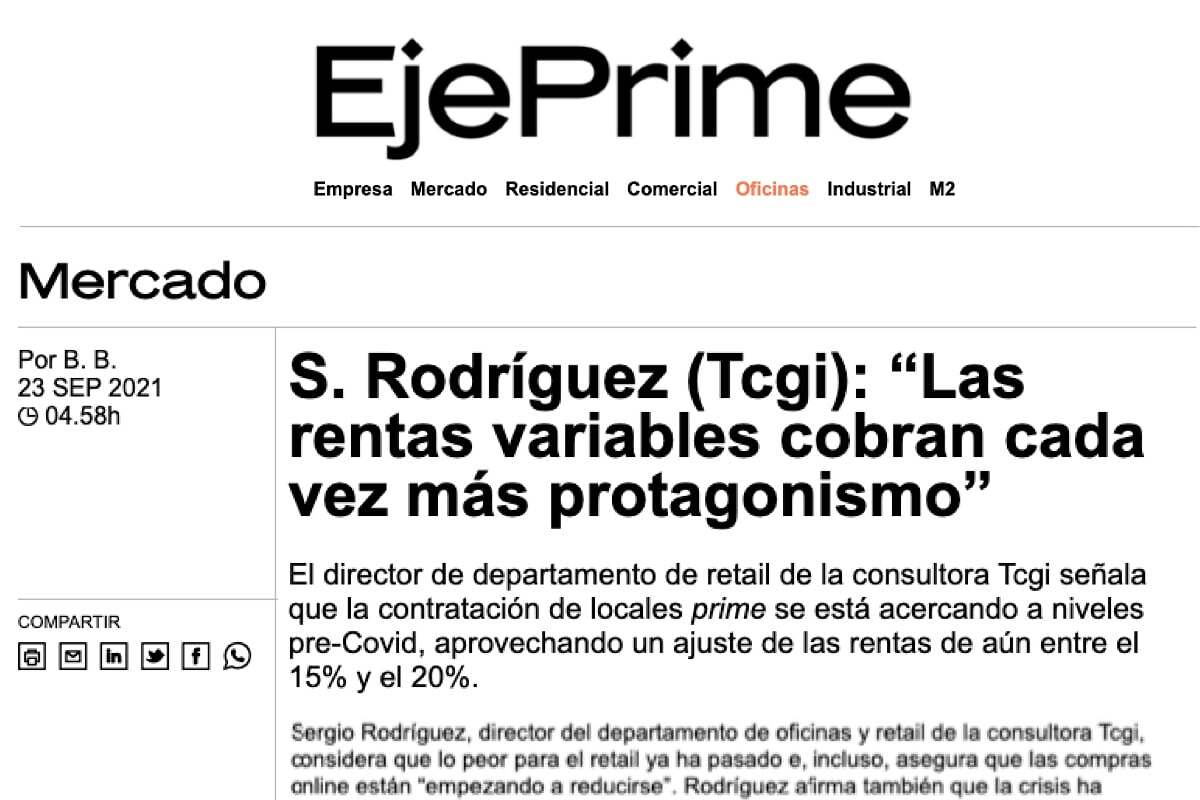
Cover of the interview in
EjePrime.
Sergio Rodríguez, director of the office and retail department of the consulting firm Tcgi, considers that the worst for retail is over and even assures that online shopping is “starting to slow down”. Rodriguez also affirms that the crisis has accelerated a change in operators, with restaurants and neighborhood services leading the changes, in addition to highlighting the investment opportunity that shopping centers represent after the crisis, which have attractive yields.

Question: Retail has been, together with the hotel industry, one of the sectors most affected by the crisis. How is it performing and what expectations do you see for the coming months?
Answer: After the end of the state of alarm last May and the passing of the desired summer period, we are beginning to see signs of improvement and we seem to be getting used to living with the pandemic. Economic activity is beginning to recover and the volume of online purchases is slowly beginning to decline, with the physical store once again gaining prominence.
P.: Just as telecommuting has changed the office model we had, it seems that e-commerce has changed retail. How will it evolve?
A.: E-commerce was already a reality before Covid-19 and what has caused the pandemic is to accelerate in many cases the processes of operators to adapt to e-commerce. Regardless of whether the purchase takes place in physical stores or in online stores, we see multiple, well-adapted sales channels as very positive. Because of the synergies generated by click&collect or pickupstore, it is not the enemy of the physical store but a business enhancer. In fact, in the restaurant industry, delivery has intensified and the dark kitchen phenomenon has emerged , which has been a way of combating the capacity restrictions in the premises, reaching customers directly, thus boosting the turnover of the operators.
P.: Unemployment is high, can you specify it by areas?
A.: Prime local hiring is approaching pre-pandemic levels and closing rents are suffering discounts of between 15% and 20%, with variable rents gaining more and more prominence over fixed rents, due to the uncertainty in sales generated by covid. Likewise, pandemic clauses are increasingly present in contracts as a preventive measure in the future.
P.: Do you see differences between frontline retail and retail in large malls?
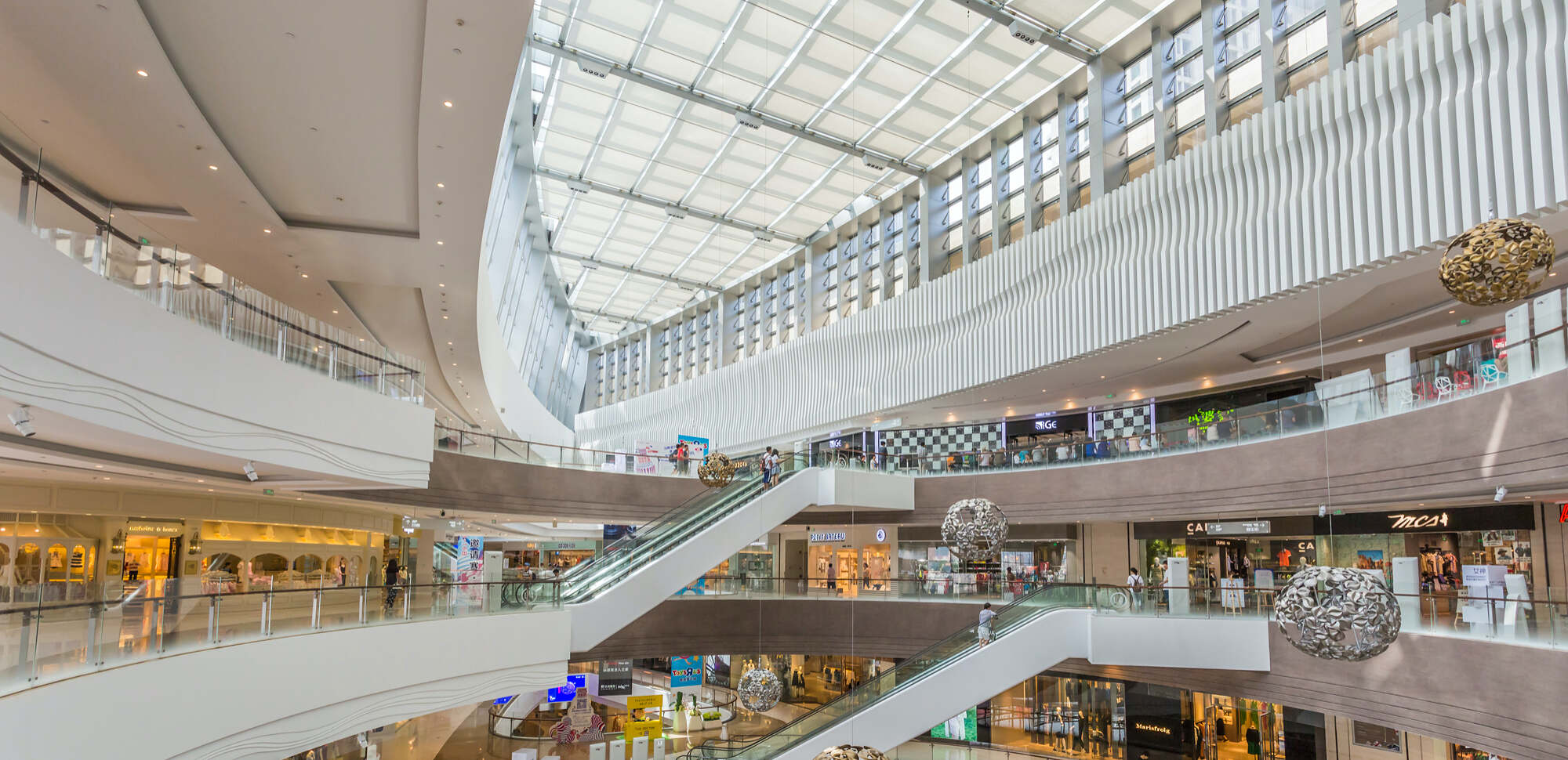
A.: Shopping malls are focused on being a place to meet and enjoy leisure time, which also includes shopping. With the arrival of the pandemic, shopping is being the preference until the situation normalizes, but no doubt that time will come and mall owners are making transformational efforts to bring their spaces back to look to live an experience. However, the urban prime store has never ceased to lose its prominence, as soon as the measures were relaxed, streets like Goya had the same pedestrian flow as before covid, since its main customer is local. It has taken the longest time to recover pedestrian levels in the downtown area, since streets such as Gran Vía depend to a large extent on tourism.
P.: What alternatives are there in those secondary areas where unemployment is higher?
A.: Secondary areas should focus on the needs of each neighborhood. Activities such as, for example, storage rooms or laundries if there are a large number of small dwellings in the area, or even considering changes of use to residential, as long as the city council allows it. In this regard, I would like to emphasize that we need the collaboration of all municipal administrations, as obtaining licenses often complicates operations.
Q.: Investment in shopping centers is at a standstill. When will it recover? How are yields evolving?
R.: Spain is one of the European countries where the greatest increase in shopping center rents is expected in the next few years, and although investment is focused on the high streetThe yields on local premises in the area of prime are being maintained at a yield around 4%, investors may once again turn their focus to shopping centers in anticipation of capturing a higher yield.
Cover photo by Freepick.